



Doing business with the poor
Results are sorted by date modified.
Practical Plan to Achieve the Millennium Development Goals

Practical Plan to Achieve the Millennium Development Goals, a UN Millennium Project Report, recommends concrete actions toward achieving the Millennium Development Goals. The report presents an overview of the findings and recommendations of the UN Millennium Project. The document was co-authored...
Cash and vouchers in emergencies
This paper is the final product of a three-year research project looking into when the option of giving people money instead of, or as well as, in-kind assistance is feasible and appropriate. A strong body of evidence is starting to emerge to indicate that providing people with cash or vouchers...
Implementing sustainable private sector development: Striving for tangible results for the poor
The key challenge for private sector development in 2006 is showing tangible, significant results in poverty eradication. Donors, researchers and practitioners have been challenged to focus on making markets work for the poor to consider the underlying rationale of market development strategies and...
Unleashing Entrepreneurship: Making Business Work for the Poor
Unleashing Entrepreneurship: Making Business Work for the Poor, a report to the UN Secretary-General, addresses how the potential of the private sector and entrepreneurship can be unleashed in developing countries, and how the existing private sector can be engaged in meeting this challenge. The...
Emergency Field Handbook: A Guide for UNICEF Staff
The Emergency Field Handbook is structured around UNICEF’s Core Commitments for Children in Emergencies. These commitments outline the organisation’s role in providing protection and assistance to children and women. They make a clear distinction between life-saving interventions that should be...
Workplace Code of Conduct
Workplace Code of Conduct, formulated by the Apparel Industry Partnership, addresses issues related to the eradication of sweatshops in the United States and abroad. The Code is a set of standards defining decent and humane working conditions.
Guidelines for building business coalitions against HIV/AIDS
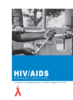
The Guidelines for building business coalitions against HIV/AIDS provides practical, operational, timely and relevant guidance to companies and/or leaders in the private sector who want to combine forces in the fight against HIV/AIDS. It includes lessons learned and examples to those interested in...
More Than Making Money – Listing of Standards, Guidelines and Principles Relevant to Corporate Impacts
More Than Making Money – Listing of Standards, Guidelines and Principles Relevant to Corporate Impacts, a listing produced by Business in the Community (BITC) and Corporate Citizen, consists of standards, guidelines and principles relevant to corporate impacts such as benchmarkable standards,...
Enabling Corporate Investment in Peace
Enabling Corporate Investment in Peace: An Assessment of Voluntary Initiatives Addressing Business and Violent Conflict, and a Framework for Policy Decision-making, a briefing for corporate decision makers, reviews the provisions of voluntary codes, guidelines and initiatives that address the...
Responsible investment: a force for poverty alleviation
The current crisis offers the opportunity to rethink the contribution that investors can make to eradicating global poverty. Oxfam believes that investors have a critical role to play in poverty alleviation, through supporting economic growth, building infrastructure, and helping to create a...
Humanitarian Assistance in Disaster Situations - A Quick Guide for Effective Donations

Humanitarian Assistance in Disaster Situations - A Quick Guide for Effective Donations, a guidebook, is designed to assist donors and recipients to make decisions that will have the greatest long-term benefit to countries affected by natural or complex disasters.
Handbook for emergencies, second edition
Effective emergency preparedness and response is a major priority of UNHCR. Crises have caused widespread human suffering and put great demands on UNHCR, prompting them to develop an effective response mechanism. Having dispatched over 300 missions throughout the world since 1992, UNHCR now has in...
Guidelines for Emergency Humanitarian Assistance Project Proposals and Reports
The Guidelines for Emergency Humanitarian Assistance Project Proposals and Reports are for agencies seeking emergency funds to support short-term international humanitarian assistance. The guidelines clarify the types of projects for which they have been developed (ie. short-term responsive...
Principles of Accountability for International Philanthropy
The Principles of Accountability for International Philanthropy, created by the Council on Foundations (COF) and the European Foundation Centre (EFC), are designed to increase the accountability and effectiveness of cross-border grantmaking. The document is intended as a voluntary and aspirational...
Quality and Accountability Initiatives: Questions and Answers

Quality and Accountability Initiatives: Questions and Answers, a web resource page, speaks to four of the most widely known inter-agency initiatives to improve accountability, quality and performance in humanitarian action: Active Learning Network for Accountability and Performance in Humanitarian...
Corporate Social Responsibility: An Implementation Guide for Business
Corporate Social Responsibility: An Implementation Guide for Business aims to provide practical guidance on CSR to companies operating in the international context. It contains information on how to assess the effects of business activities on others, develop and implement a CSR strategy and...
Public-Private Partnerships for Development - A Handbook for Business
Public-Private Partnerships for Development - A Handbook for Business was developed to help businesses operating in developing countries to understand how to build public-private partnerships that will benefit their host country populations and participating firms.
International Non Governmental Organisations Accountability Charter
International Non Governmental Organisations Accountability Charter resulted from a gathering of INGOs to systematise and reduce the number of structures NGOs must respond to. The INGOs who are signatories to the Charter agree to abide by the following principles: respect for universal principles,...
Enterprise Solutions to Poverty: Opportunities and Challenges for the International Development Community and Big Business
Enterprise Solutions to Poverty: Opportunities and Challenges for the International Development Community and Big Business, a report written by the Shell Foundation, argues that enterprise and business thinking must be placed at the heart of efforts to address poverty. The report concludes by...
G3 Guidelines of the GRI Sustainability Reporting Framework
The G3 Guidelines of the GRI Sustainability Reporting Framework provide guidance for organisations to use as the basis for disclosure about their sustainability performance (organisation’s economic, environmental, and social performance), and also provide stakeholders a universally-applicable,...