



Doing business with the poor
Results are sorted by date modified.
Business UNusual
Business UNusual, a collaborative publication of the United Nations Global Compact Office and the Global Public Policy Institute, provides an overview of recent partnership activities in the United Nations, as well as the challenges the UN faces in its efforts to engage the private sector and...
Global Corruption Report
Now in its eighth year, this annual publication by Transparency International brings together scholars and civil society activists to examine the state of corruption around the globe. The latest edition (2009) focuses on corruption and the private sector.
Needs assessment and decision-making in the humanitarian sector
This report documents the findings of a year-long study into the link between needs assessment and decision-making in the humanitarian sector.
AccountAbility Rating

AccountAbility Rating, a tool developed by CRS Network and AccountAbility, measures the extent to which companies put responsible practices at the heart of their business, assessed across key domains. These domains include stakeholder engagement, strategy, governance, performance management, public...
Code of Conduct for NGOs in Ethiopia
Code of Conduct for NGOs in Ethiopia aims to ensure transparency and accountability in the operation of NGOs by voluntary self-regulation. The Code also seeks to improve the quality of services provided by NGOs by helping NGOs to adopt high standards of conduct and to devise efficient...
Doing Business with the World: The New Role of Corporate Leadership in Global Development
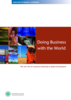
Doing Business with the World, a publication of the World Business Council for Sustainable Development (WBCSD), describes how companies can contribute to global sustainable development through their core businesses in a way that is profitable for the companies and good for development.
GoodCompany Guidelines for Corporate Social Performance

The GoodCompany Guidelines for Corporate Social Performance provide a framework for implementing socially and environmentally responsible initiatives at the company level. This is a practical tool, with additional resources to assist companies in implementing the initiatives it decides to pursue....
Corporate Volunteer Reporting Standards v2.0
Corporate Volunteer Reporting Standards v2.0 are used for reporting the activities of a company’s employee volunteer program. Standards relate to areas such as volunteer activities, employee volunteers, volunteer hours and dollar value of volunteer hours.
Measuring the impact of humanitarian aid
This report investigates the current state of the art in measuring and analysing the impact of humanitarian assistance. It is concerned with questions around how impact can be measured, why this is increasingly being demanded, and whether it is possible to do it better. It also explores the...
The 2008 Humanitarian Accountability Report
The 2008 Humanitarian Accountability Report reviews the progress made towards strengthening accountability norms and practices in the humanitarian sector, including an overview of Humanitarian Accountability in 2008. The report also provides detail findings of the annual perceptions of humanitarian...
Partnering for Development - Making it Happen
Partnering for Development - Making it Happen, a booklet, builds on the report from the Commission on the Private Sector and Development and looks at three areas of engagement: the development of commercially sustainable business models that can be expanded and replicated; the reform of laws,...
Responding to urban disasters: Learning from previous relief and recovery operations
This paper draws on experience from the responses to a number of urban disasters. It highlights key lessons to guide local authorities, national governments, international agencies, the private sector, learning centres and community organisations in approaching the specific challenges of addressing...
Key issues in emergency needs assessment
Over 50 representatives from governments, multilateral agencies, NGOs, regional bodies, research institutes and consultancy firms gathered at WFP's Rome headquarters in October 2003 for the third technical consultation on strengthening emergency needs assessments. A series of technical workshops...
ISO 26000

ISO 26000 is a voluntary international standard providing guidance on social responsibility. It will add value to existing social responsibility work by developing an international consensus on the social responsibility concept and the issues that organisations need to address. ISO 26000, which is...
Business Contributions to UN Emergency Relief Efforts: An Orientation Guide
Business Contributions to UN Emergency Relief Efforts: An Orientation Guide describes the role of various UN agencies during an emergency, and identifies ways in which companies can support relief efforts in a timely and appropriate manner, through cash contributions, in-kind donations, or...
Real Access Criteria
Real Access Criteria are used to frame the analysis of all issues surrounding ICT access and use, including the aspects that are often overlooked. They are designed to anticipate or detect the reasons that ICT development initiatives, government e-strategies, or grassroots projects fail to achieve...
ACT Guiding Principles on Material Aid
ACT Guiding Principles on Material Aid, a policy guide, outlines ACT International's principles on material aid donations, the responsibilities of donors and implementing ACT members, and specifications relating to particular material aid categories.
Harnessing Private Sector Capabilities to Meet Public Needs: The Potential of Partnerships to Advance Progress on Hunger, Malaria and Basic Education
Harnessing Private Sector Capabilities to Meet Public Needs: The Potential of Partnerships to Advance Progress on Hunger, Malaria and Basic Education, a report of the WEF, discusses the four main ways in which businesses typically engage in the process of economic development: core business...
Guiding Principles for Philanthropic Private Sector Engagement in Humanitarian Action
The Guiding Principles for Philanthropic Private Sector Engagement in Humanitarian Action, a crosscutting set of guiding principles, is aimed at fostering commitment from the private sector for preparedness and relief activities. The document lists ten principles for the private sector to follow.
ECHO Manual for the Evaluation of Humanitarian Aid
ECHO Manual for the Evaluation of Humanitarian Aid provides the evaluation practice, methods, and theory utilised by the European Community Humanitarian Office (ECHO) to assess humanitarian aid operations.